
Categories
Buying Real Estate, Real Estate TipsPublished October 7, 2026
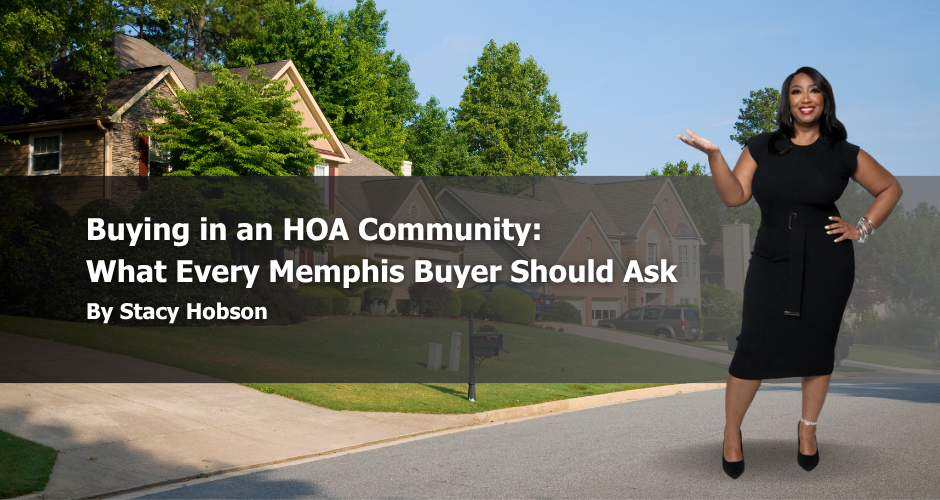
Buying in an HOA Community: What Every Memphis Buyer Should Ask

You found the house. The kitchen is bright, the yard is the right size, and the neighborhood feels like home. Then your agent mentions, "It's in an HOA." Suddenly there are monthly dues, a rulebook, and a board of neighbors you haven't met yet.
Homeowners associations are common across the Mid-South, from established subdivisions in Germantown and Collierville to newer developments in Arlington, Cordova, and Bartlett, and in condominium and townhome communities closer to the river. They can be a real asset. They can also be a real surprise if you don't do your homework. As a buyer, the time to ask questions is before you sign, not after you close.
Here is what I encourage every one of my buyers to ask.
1. What do the dues cover, and what do they cost?
Dues vary widely. Some associations cover little more than an entrance sign and common-area mowing. Others include exterior maintenance, trash service, a pool, a clubhouse, security, or insurance on shared structures.
• How much are the dues, and how often are they paid? Monthly, quarterly, and annual schedules are all common.
• What exactly is included? Ask for a written list so you know what you are paying for and what remains your responsibility.
• Are there transfer fees, capital contributions, or move-in fees at closing? These one-time charges can add up and should be factored into your cash to close.
• How have dues changed over the past five years? A history of steady, modest increases is very different from sudden jumps.
2. Is the association financially healthy?
An HOA's finances tell you a great deal about how the community will be run. Ask for the current budget, the most recent financial statements, and the reserve study if one exists. Reserves are savings set aside for big future expenses like roof replacements, repaving, or pool repairs. When reserves are thin, the usual solutions are higher dues or a special assessment.
• What is the reserve balance, and is there a reserve study? This shows whether the association is planning for long-term costs.
• Are any special assessments planned or recently levied? These are one-time charges to owners, sometimes thousands of dollars.
• What percentage of owners are behind on dues? High delinquency can strain the budget and, in some cases, affect certain lending options.
• Is the association involved in any lawsuits? Pending or threatened litigation is something you want to know about early.
3. What are the rules, and can you live with them?
The governing documents (often called the covenants, conditions, and restrictions, or CC&Rs, along with the bylaws and rules) spell out what you can and cannot do with your property. Request them early and actually read them. I have seen buyers fall in love with a home and later discover a rule that clashed with how they planned to live.
Pay close attention to restrictions on:
• Exterior changes such as paint colors, fencing, landscaping, additions, and solar panels
• Pets, including breed, size, or number limits
• Parking, including trucks, work vehicles, boats, RVs, and street parking
• Rentals, including whether you can lease the home now or later, and any minimum lease terms
• Home businesses and short-term rentals
• Basketball goals, sheds, playsets, flags, and holiday decorations
If you plan to rent the property out, work remotely with client visits, or keep a work truck at home, confirm that in writing before you commit.
4. How are the rules enforced?
Rules matter only as much as the way they are applied. Ask how violations are handled, what the fine schedule looks like, and whether owners have a chance to respond or appeal. Also ask how responsive the board and management company are when residents have concerns. A well-run association is consistent, communicative, and fair.
5. Who manages the community?
Some associations are self-managed by volunteer board members, while others hire a professional management company. Neither is automatically better, but you should know which one you are dealing with. Ask for the contact information of the manager or board president, and find out how requests and payments are handled. Online portals and clear communication make ownership much easier.
6. What does the association insure, and what must you insure?
This question is especially important for condos and townhomes. The master policy may cover the building structure but not your interior finishes, belongings, or personal liability. In some communities it covers only the bare walls. Ask for a copy of the association's insurance certificate and share it with your own insurance agent so you can purchase the right coverage. In the Memphis area, it is also worth asking about wind and hail coverage and the deductibles that apply.
7. Who owns and maintains the streets, drainage, and common areas?
In some neighborhoods, the roads, sidewalks, and storm drainage belong to the city or county. In others, particularly gated or private communities, the association is responsible for them. Private streets and shared amenities can mean larger future repair costs, so know who is on the hook. Ask about the age and condition of the pool, clubhouse, playground, retention ponds, and entrance features.
8. How does the HOA affect financing and resale?
Your lender may need documentation from the association, especially for condominiums, and certain loan programs have requirements about owner-occupancy rates, reserves, and litigation. Resale matters too. A well-maintained community with sensible rules tends to hold its appeal, while a poorly managed one can make selling harder. Think of today's questions as protection for your future self as a seller.
9. Can you attend a meeting or talk to a neighbor?
Documents tell you what is written down. People tell you how it really feels. Ask whether you can review recent board meeting minutes, and if possible, chat with a few current residents. Questions like "Are you happy here?" and "How does the board handle disagreements?" can reveal more than any spreadsheet.
Quick-reference checklist
Use this table as a starting point when touring HOA properties and reviewing the paperwork.
|
Topic |
What to request or ask |
|
Dues & fees |
Amount, schedule, what is included, transfer and capital fees at closing |
|
Financials |
Current budget, recent financial statements, reserve study, planned or past special assessments |
|
Governing documents |
CC&Rs, bylaws, rules and regulations, architectural guidelines |
|
Enforcement |
Fine schedule, violation process, appeal rights |
|
Management |
Management company or board contact, communication and payment methods |
|
Insurance |
Master policy certificate, what it covers, your required coverage |
|
Common areas |
Ownership of roads and drainage, condition and age of amenities |
|
Meetings |
Recent board minutes and upcoming meeting dates |
|
Litigation & delinquency |
Any lawsuits, and the share of owners behind on dues |
A final thought
An HOA is neither good nor bad on its own. For many buyers, the shared amenities, maintained landscaping, and consistent standards are exactly what they want. For others, the rules and costs are a poor fit. The goal is to buy with your eyes open so your new home brings you comfort rather than surprises.
Every community is different, and it is smart to have your agent and, when appropriate, a real estate attorney review the documents with you during your due diligence period. If you are thinking about buying in the Memphis area, I would be glad to help you ask the right questions and find the community that fits your life.
Ready to Take the Next Step?
Buying in an HOA community rewards buyers who are informed, thorough, and well advised. Whether you are purchasing your first home or moving into your next one, my goal is to help you move forward with clear numbers and no surprises.
If you would like to talk through your goals or review the paperwork on a specific property, I would be glad to help. Reach out to me at J Hunter Realty, LLC, and let's find the right community for you.
Stacy Hobson, MBA
Owner-Managing Broker | J Hunter Realty, LLC
Licensed in TN & MS
901.483.0412 | 901.405.0500
3383 Park Ave, Memphis, TN 38111
This article is for general informational purposes only and is not legal, financial, or tax advice. Please consult a qualified professional about your specific situation.

Stacy Hobson, MBA
Managing Broker | Stacy Hobson | J Hunter Realty, LLC
or another way